Hills Like White Elephants: A Comprehensive Analysis
Finding a readily accessible PDF version of Ernest Hemingway’s “Hills Like White Elephants” is surprisingly straightforward. Numerous online platforms offer
the story for free download, catering to students and literary enthusiasts alike.
Digital archives and educational websites frequently host the text, ensuring its preservation and widespread availability. Searching with keywords like
“Hemingway hills like white elephants pdf” yields quick results.
However, verifying the source’s legitimacy is crucial to avoid corrupted files or unauthorized copies. Reputable sources include Project Gutenberg and university
digital libraries, providing reliable access to this iconic short story.
“Hills Like White Elephants,” penned by the celebrated American author Ernest Hemingway, stands as a cornerstone of modernist literature. Published in 1927, this concise yet profoundly impactful short story exemplifies Hemingway’s signature style – a minimalist approach characterized by sparse dialogue and understated emotional depth. The narrative unfolds around an American man and a young woman, Jig, as they await a train in Spain.
The story’s power lies not in explicit statements, but in the subtle tension and unspoken anxieties that permeate their conversation. The central conflict revolves around a difficult decision – a potential abortion – presented with remarkable ambiguity. Hemingway masterfully employs symbolism and subtext, leaving the reader to decipher the characters’ true feelings and the weight of their predicament.

Accessibility to the text itself is remarkably easy in the digital age. A quick search for “hills like white elephants pdf” reveals numerous online sources offering the story for free download. This widespread availability underscores the story’s enduring relevance and its continued presence in academic curricula and literary discussions. The ease of obtaining a PDF version allows for convenient study and analysis, furthering appreciation for Hemingway’s artistry.
Its enduring appeal stems from its universal themes of choice, communication, and the complexities of relationships. The story continues to resonate with readers today, prompting reflection on personal autonomy and the challenges of navigating difficult life decisions.
II. Historical Context of “Hills Like White Elephants” (1927)
Published in 1927, “Hills Like White Elephants” emerges from a period of significant social and cultural upheaval – the Roaring Twenties, and the aftermath of World War I. This era, often referred to as the “Lost Generation,” witnessed a disillusionment with traditional values and a burgeoning sense of moral ambiguity. Hemingway himself was a part of this expatriate community, living in Europe and observing the changing societal norms.
The story’s exploration of abortion is particularly relevant when considering the legal and social landscape of the 1920s. Abortion was largely illegal and often dangerous, performed clandestinely with limited access to safe medical care. The story doesn’t explicitly mention the procedure by name, but the coded language and the couple’s anxiety reflect the fraught realities of the time.
The accessibility of the story today, through readily available “hills like white elephants pdf” downloads, allows modern readers to engage with this historical context. Examining the text alongside research into the 1920s provides a richer understanding of the story’s underlying themes and its subtle critique of societal pressures. The ease of access facilitates a deeper appreciation for Hemingway’s nuanced portrayal of a complex issue.
Furthermore, the story’s setting in Spain – a country with different cultural attitudes towards reproductive rights – adds another layer of historical complexity, highlighting the varying perspectives on the issue.
III. Summary of the Plot
“Hills Like White Elephants” unfolds almost entirely as a dialogue between an American man and a young woman named Jig, at a Spanish train station while awaiting a train to Madrid. The conversation centers around a significant, unspoken decision: whether or not Jig should have an abortion.

The man attempts to persuade Jig to undergo the procedure, framing it as a simple solution that will allow them to return to their carefree, nomadic lifestyle. He repeatedly emphasizes that he doesn’t want her to do it if she doesn’t want to, yet subtly pressures her with assurances of his love and a return to “the way things were.”
Jig, however, expresses ambivalence and uncertainty, questioning the true nature of their relationship and the potential consequences of the abortion. She observes the surrounding landscape, drawing parallels between the barren hills and her own situation. The story’s tension arises from the couple’s inability to communicate openly and honestly about their feelings.
The narrative concludes without a resolution, leaving the reader to infer Jig’s ultimate decision. Accessing a “hills like white elephants pdf” allows for close reading and repeated analysis of the dialogue, revealing the subtle power dynamics and emotional complexities at play. The story’s power lies in its ambiguity and its exploration of a pivotal moment in a relationship.
IV. Character Analysis: The American Man
The American man in Hemingway’s “Hills Like White Elephants” is a study in subtle manipulation and emotional detachment. He presents himself as supportive of Jig’s decision, repeatedly stating he wants what she wants, yet his words and actions reveal a clear preference for the abortion.
He avoids direct confrontation, employing indirect language and minimizing the significance of the procedure. His insistence that it’s “perfectly simple” and will resolve their problems demonstrates a desire to control the situation and avoid genuine emotional engagement. He prioritizes a return to their previous lifestyle, seemingly valuing his own comfort over Jig’s feelings.
The man’s character is revealed through his dialogue, showcasing a patronizing tone and a lack of empathy. He attempts to alleviate Jig’s concerns with superficial reassurances, dismissing her anxieties as temporary. A “hills like white elephants pdf” allows for careful examination of his language, highlighting his manipulative tactics.
Ultimately, he embodies a certain type of masculinity – one that avoids vulnerability and prioritizes control. His inability to truly connect with Jig underscores the story’s themes of communication breakdown and the power imbalances within their relationship. He remains largely undefined, a cipher representing a particular attitude towards women and reproductive choices.
V. Character Analysis: Jig (The Girl)
Jig, the unnamed female protagonist in “Hills Like White Elephants,” is a complex character grappling with a life-altering decision. She embodies a quiet desperation, torn between her desire for the American man’s approval and her own uncertain feelings about the abortion.
Initially appearing passive, Jig’s internal conflict gradually surfaces through her observations and subtle questions. She uses the imagery of the hills and the landscape to symbolize her ambivalence, seeking a way to understand her situation and articulate her emotions. A “hills like white elephants pdf” facilitates close reading of her nuanced responses.
Her attempts to engage the man in meaningful conversation are consistently met with evasion and dismissiveness, highlighting her isolation and vulnerability. She tests his commitment, probing his willingness to support her regardless of her choice, but receives only superficial assurances.
Jig’s final statement, “I feel fine,” is deeply ironic, masking her profound uncertainty and resignation. She ultimately concedes to the man’s wishes, sacrificing her own agency in an attempt to preserve their relationship. Her character represents the societal pressures and limited options faced by women in the 1920s.
VI. Symbolism of the “Hills Like White Elephants”
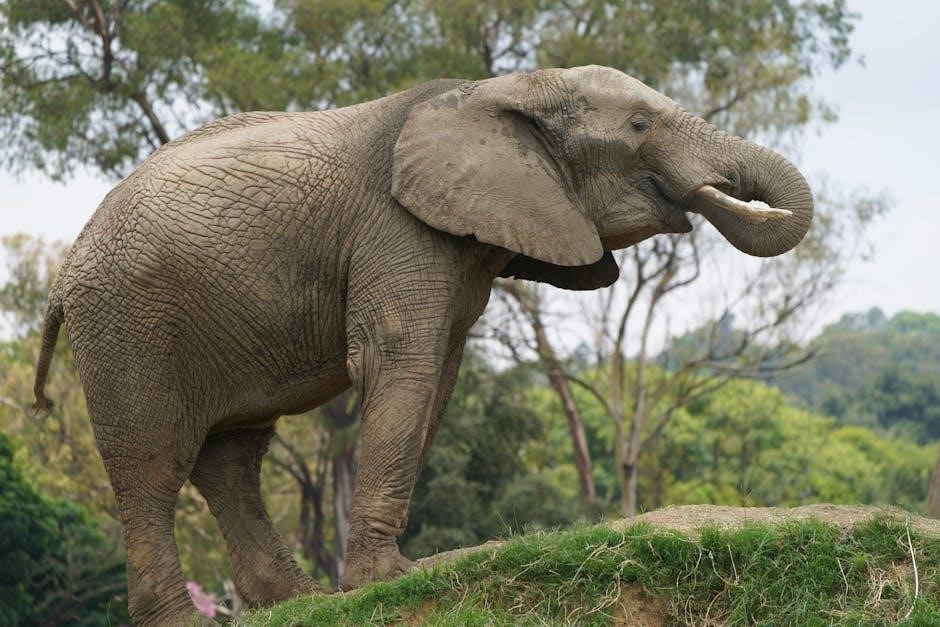
The “hills like white elephants” themselves are the story’s central and most debated symbol. Initially, Jig finds their shape reminiscent of the creatures, suggesting something beautiful yet burdensome, a gift that may prove unwanted. Accessing a “hills like white elephants pdf” allows for repeated analysis of this pivotal image.
The white elephants traditionally represent costly, unwanted gifts in Southeast Asian cultures, hinting at the potential consequences of the abortion – a procedure that could irrevocably alter Jig’s life and their relationship. The hills also symbolize fertility and the potential for new life, contrasted with the sterility implied by the operation.
The contrasting landscapes on either side of the train station further reinforce this duality. One side is barren and dry, representing a life without a child, while the other is lush and fertile, symbolizing the possibility of motherhood.
The drink, Anis del Toro, symbolizes the attempt to numb the emotional pain and avoid confronting the difficult decision. Ultimately, the symbolism is deliberately ambiguous, reflecting the story’s exploration of choice and its inherent uncertainties.
VII. The Train Station as a Symbol of Choice
The train station in “Hills Like White Elephants” functions as a potent symbol of crossroads and decision-making. Situated between two sets of tracks, it represents the diverging paths available to Jig and the American man. A readily available “hills like white elephants pdf” facilitates close textual examination of this crucial setting.
The station itself is a liminal space – a place of transition, neither here nor there – mirroring Jig’s emotional state as she grapples with the life-altering choice before her. The trains symbolize the different futures they could pursue: one with the child, and one without.
The act of waiting for a train emphasizes the suspension of time and the weight of anticipation. Jig and the American are stuck in this in-between space, unable to move forward until a decision is made.
The station’s neutrality further underscores the lack of guidance or external pressure. The choice is entirely theirs, and the station simply provides the physical space for that decision to unfold, highlighting the story’s focus on individual agency and responsibility.
VIII. The Drink (Anis del Toro) and its Symbolic Weight
The Anis del Toro, the anise-flavored liqueur repeatedly consumed by the American and Jig, carries significant symbolic weight within Hemingway’s “Hills Like White Elephants.” Accessing a “hills like white elephants pdf” allows for detailed analysis of its recurring presence and associated dialogue.
Initially, the drink appears as a gesture of attempted connection and relaxation, a means to ease the tension surrounding their difficult conversation. However, it quickly becomes apparent that the American is using it to subtly pressure Jig into agreeing with his desired outcome.
The sweetness of the Anis del Toro contrasts sharply with the bitterness of their situation, representing a superficial attempt to mask the underlying conflict. It’s a temporary escape, a distraction from the gravity of their decision.
Furthermore, the American’s insistence on Jig having another drink can be interpreted as a form of control, a way to diminish her resistance and cloud her judgment. The drink, therefore, embodies manipulation and the power imbalance within their relationship.
IX. Themes: Abortion and Reproductive Rights
The central, though unspoken, theme of “Hills Like White Elephants” revolves around abortion and, by extension, reproductive rights. A readily available “hills like white elephants pdf” facilitates close reading to discern the subtle yet powerful exploration of this sensitive topic.
Hemingway masterfully avoids explicitly mentioning the word “abortion,” instead relying on coded language and subtext. The “operation” the American repeatedly references is clearly intended to represent a termination of the pregnancy, a fact reinforced by their conversation’s context.
The story doesn’t offer a judgment on abortion itself, but rather presents the emotional and psychological toll it takes on a couple grappling with the decision. Jig’s internal conflict and the American’s manipulative attempts highlight the complexities involved.
The narrative implicitly raises questions about female agency and control over one’s body, particularly within a patriarchal framework. The American’s desire for Jig to have the operation stems from his own convenience and unwillingness to embrace parenthood, underscoring the power dynamics at play.
X. Themes: Communication Breakdown and Misunderstanding
A pervasive theme in Hemingway’s “Hills Like White Elephants,” easily observed within a “hills like white elephants pdf” version, is the profound communication breakdown between the American man and Jig. Their dialogue, while frequent, is largely superficial and avoids direct confrontation with the core issue – the potential abortion.
The story is characterized by what isn’t said, the unspoken anxieties and desires that simmer beneath the surface. The American employs vague language and repeated assurances that he wants Jig to do what she wants, yet subtly pressures her towards the operation.
Jig, in turn, struggles to articulate her own feelings, often responding with hesitant agreement or evasive answers. Her observations about the hills resembling white elephants symbolize her ambivalence and the weight of the decision.
This lack of genuine communication creates a chasm between them, fostering misunderstanding and resentment. The American’s inability to empathize with Jig’s emotional turmoil further exacerbates the problem, highlighting the story’s tragic undercurrent.
Ultimately, the story demonstrates how a failure to communicate honestly and openly can irrevocably damage a relationship.
XI. Themes: Gender Roles and Power Dynamics
Examining “Hills Like White Elephants,” readily available as a “hills like white elephants pdf,” reveals a stark portrayal of gender roles and power dynamics prevalent in the 1920s. The American man assumes a dominant position, subtly controlling the conversation and attempting to steer Jig towards a decision that suits his desires.
He frames the abortion as a simple procedure, minimizing its emotional and physical impact on Jig, and repeatedly emphasizes his willingness to support her choice – while simultaneously making it clear he prefers one outcome. This manipulative tactic demonstrates his power imbalance.
Jig, conversely, is presented as passive and indecisive, struggling to assert her own agency. Her questions and observations are often met with dismissive responses or vague reassurances, silencing her voice and reinforcing her subordinate role.
The story subtly critiques the societal expectations placed upon women during that era, where reproductive choices were often dictated by male partners. Jig’s internal conflict reflects the limited options available to her and the pressure to conform to societal norms.
Hemingway masterfully exposes the unequal power dynamic, leaving the reader to question the true nature of Jig’s “choice” and the implications for their relationship.
XII. Hemingway’s Iceberg Theory and its Application

Ernest Hemingway’s famed “Iceberg Theory,” powerfully demonstrated in “Hills Like White Elephants” – easily found as a “hills like white elephants pdf” – dictates that a story’s true meaning lies beneath the surface. Only a fraction of the narrative is explicitly stated; the majority is implied, relying on the reader to interpret the unspoken.
The dialogue, seemingly simple and repetitive, conceals a complex emotional landscape. The couple’s conversation about the “operation” never directly names abortion, yet the underlying tension and Jig’s growing anxiety reveal the gravity of the situation.
Hemingway deliberately omits explicit descriptions of their feelings, forcing the reader to infer their motivations and internal struggles. The symbolic weight of the hills, the train station, and the drink all contribute to the story’s submerged meaning.
This minimalist approach demands active engagement from the reader, prompting them to fill in the gaps and construct their own understanding of the characters’ predicament. The story’s power resides in what is not said.
The Iceberg Theory allows for multiple interpretations, making “Hills Like White Elephants” a timeless and enduring work of literary art.
XIII. Narrative Style: Dialogue and Subtext
“Hills Like White Elephants,” readily available as a “hills like white elephants pdf,” is masterfully constructed through almost entirely dialogue-driven narrative. Hemingway eschews traditional descriptive prose, relying instead on the exchange between the American man and Jig to reveal the story’s core conflict.
This stylistic choice emphasizes the communication breakdown between the characters. Their conversation is superficially polite, yet riddled with unspoken anxieties and passive-aggressive undertones. The subtext – what is implied but not stated – is far more significant than the literal words exchanged.
The repetition of phrases and the use of seemingly innocuous questions create a sense of mounting tension. The man’s attempts to persuade Jig are veiled in concern, while her responses are often hesitant and ambiguous.
Hemingway’s minimalist dialogue forces the reader to actively participate in deciphering the characters’ true feelings and motivations. The lack of explicit narration heightens the emotional impact of the story.
This technique showcases Hemingway’s skill in conveying complex emotions through subtle nuances in language and interaction.
XIV. Point of View and its Impact
The story, easily accessible in a “hills like white elephants pdf” format, is told through an objective, third-person limited point of view. Hemingway deliberately restricts the narrative perspective, primarily focusing on Jig’s internal experience while offering glimpses into the American’s perspective through his dialogue.
This narrative choice is crucial to the story’s ambiguity and emotional resonance. We are privy to Jig’s observations, anxieties, and subtle shifts in mood, but her innermost thoughts remain largely unstated, mirroring the communication breakdown with the American.
The limited perspective prevents a definitive judgment of either character. We understand the American’s desire to avoid responsibility, but also recognize Jig’s internal conflict and vulnerability.
By withholding complete access to either character’s mind, Hemingway forces the reader to actively interpret their motivations and the power dynamics at play.
The objective tone enhances the story’s realism and allows the reader to draw their own conclusions about the ethical and emotional complexities of the situation.
XV. Critical Reception and Interpretations
“Hills Like White Elephants,” readily found as a “hills like white elephants pdf” online, has garnered significant critical attention since its 1927 publication. Initial responses focused on Hemingway’s minimalist style and the story’s subtle yet powerful depiction of a fraught conversation.
Early critics often centered on the story’s implied subject matter – abortion – and debated Hemingway’s stance on the issue. Some viewed the American as manipulative and coercive, while others saw Jig as indecisive and passively accepting.
Later interpretations expanded beyond the abortion debate, exploring themes of communication breakdown, gender roles, and the disillusionment of the Lost Generation.
Scholars have analyzed the story’s symbolism, particularly the “hills like white elephants,” offering diverse interpretations ranging from unwanted pregnancy to lost innocence.
The story’s enduring appeal lies in its ambiguity and its ability to provoke ongoing discussion and re-evaluation. Its concise form and understated language continue to challenge and captivate readers and critics alike.
XVI. “Hills Like White Elephants” and the Lost Generation
“Hills Like White Elephants,” easily accessible as a “hills like white elephants pdf” download, is frequently linked to the literary movement known as the Lost Generation. This cohort of American expatriate writers, disillusioned by the horrors of World War I, explored themes of alienation, moral ambiguity, and the search for meaning in a fractured world.
Hemingway himself was a prominent figure within this group, and his minimalist style and focus on understated emotion reflect the Lost Generation’s rejection of traditional Victorian values. The story’s characters, adrift in a foreign landscape, embody the sense of rootlessness and existential uncertainty characteristic of the era.
The couple’s strained communication and inability to connect emotionally mirror the broader societal breakdown experienced by the Lost Generation. Their conversation, devoid of genuine intimacy, highlights the difficulty of finding solace and understanding in a post-war world.
The story’s ambiguous ending further reinforces this sense of disillusionment, leaving the reader with no easy answers or resolutions. It encapsulates the Lost Generation’s skepticism and its rejection of grand narratives.
Ultimately, “Hills Like White Elephants” serves as a poignant microcosm of the Lost Generation’s anxieties and its struggle to navigate a rapidly changing world.
XVII. Comparison to Other Hemingway Works
Examining “Hills Like White Elephants,” readily found as a “hills like white elephants pdf,” reveals striking similarities to other works by Ernest Hemingway. Like “The Sun Also Rises” and “A Farewell to Arms,” it employs a minimalist style, relying heavily on dialogue and subtext to convey complex emotions and themes.
Hemingway’s signature “iceberg theory” is prominently displayed; much of the story’s meaning lies beneath the surface, requiring careful reading and interpretation. This technique, common throughout his oeuvre, forces the reader to actively participate in constructing the narrative’s significance.
The story shares with “The Killers” a sense of underlying tension and unspoken threat. While lacking explicit violence, “Hills Like White Elephants” generates a palpable sense of unease through its carefully crafted dialogue and ambiguous setting.
Furthermore, the theme of existential choice, central to “Hills Like White Elephants,” resonates with the protagonists’ struggles in “For Whom the Bell Tolls.” Hemingway consistently explores the weight of individual decisions and their consequences.
In essence, “Hills Like White Elephants” exemplifies Hemingway’s characteristic style and thematic concerns, solidifying its place within his broader body of work.
XVIII. Adaptations of “Hills Like White Elephants” (Film, Stage)
Despite its brevity, “Hills Like White Elephants,” easily accessible as a “hills like white elephants pdf,” has inspired several adaptations for both film and stage. The story’s concentrated dialogue and dramatic tension lend themselves well to visual and performance mediums.
Numerous short film adaptations have attempted to capture the story’s nuanced emotional landscape. These often focus on the non-verbal communication between the characters, mirroring Hemingway’s reliance on subtext. However, faithfully translating the story’s internal complexities proves challenging.
Stage productions frequently utilize minimalist staging, mirroring the story’s sparse prose. Actors are tasked with conveying the characters’ unspoken anxieties and conflicting desires through subtle gestures and vocal inflections.
While a direct, large-scale cinematic adaptation remains elusive, the story’s themes have influenced broader works exploring similar issues of choice and communication. Its impact can be seen in films dealing with difficult decisions and strained relationships.
Ultimately, adaptations of “Hills Like White Elephants” serve as testament to the story’s enduring power and its ability to resonate with audiences across different mediums.
XIX. The Story’s Relevance in Contemporary Society
“Hills Like White Elephants,” readily available as a “hills like white elephants pdf,” continues to resonate deeply with contemporary audiences due to its exploration of timeless and universally relevant themes. The story’s central conflict – a couple grappling with an unwanted pregnancy and the difficult decision of abortion – remains a potent and often contentious issue today.
The story’s depiction of communication breakdown and the power dynamics within relationships also feels strikingly modern. The subtle manipulation and unspoken pressures experienced by Jig mirror challenges faced in many contemporary partnerships.
Furthermore, the story’s exploration of female agency and reproductive rights is particularly relevant in light of ongoing debates surrounding these issues globally. Jig’s internal struggle reflects the complex emotions and societal pressures women often encounter when making decisions about their bodies.
Hemingway’s masterful use of subtext encourages readers to confront their own biases and assumptions about these sensitive topics. The story’s ambiguity fosters critical thinking and promotes empathy.
In a world grappling with complex ethical dilemmas, “Hills Like White Elephants” serves as a powerful reminder of the importance of open communication, mutual respect, and individual autonomy.
XXI. Availability of the PDF Version of the Story
Locating a “hills like white elephants pdf” is remarkably easy in the digital age, offering convenient access to Hemingway’s impactful short story. Numerous online repositories and educational platforms host the text in a portable document format, catering to students, researchers, and casual readers alike.
Project Gutenberg stands out as a reliable source, providing a free, legally obtained PDF version of the story. Many university and college websites also offer downloadable PDFs as part of their course materials or digital libraries.
A simple web search using keywords like “Hemingway hills like white elephants pdf download” quickly yields a plethora of results. However, exercising caution is advised when selecting a source to ensure the file is legitimate and free from malware.
Reputable academic databases and online literary journals are also excellent places to find a trustworthy PDF version. These sources often provide annotated editions or critical analyses alongside the text.
The widespread availability of the PDF format underscores the story’s enduring popularity and its continued relevance in contemporary literary studies.