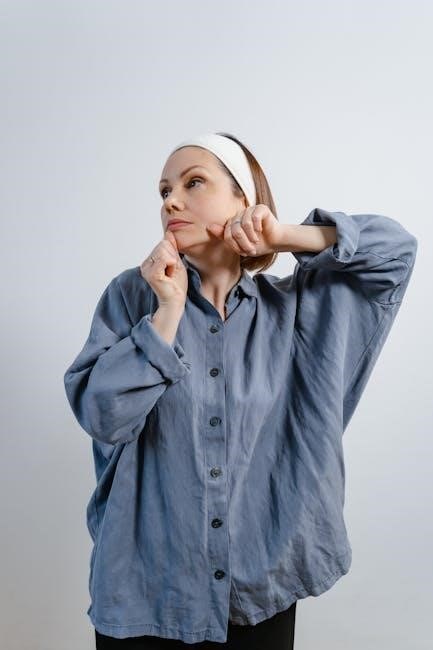
Understanding Facial Paralysis
Facial paralysis arises from facial nerve damage, causing weakness or inability to move facial muscles; Bells palsy is a frequent cause, impacting expression and function.

What is Facial Paralysis?
Facial paralysis signifies a loss of voluntary muscle movement on one or both sides of the face. This condition stems from damage to the facial nerve, the cranial nerve responsible for controlling facial expressions, tear production, and even taste. The severity can range from mild weakness to complete inability to move muscles.
Symptoms manifest as drooping of the face, difficulty closing one eye, trouble smiling or frowning, and altered taste sensation. Bells palsy, a common cause, presents as a sudden onset of weakness, while other causes, like stroke or infection, may develop more gradually. Understanding the underlying cause is crucial for appropriate treatment and rehabilitation, often involving targeted exercises.

Causes of Facial Paralysis
Facial paralysis isn’t a single disease but a symptom with diverse origins. Bells palsy, often idiopathic, involves facial nerve inflammation, representing a frequent cause. Strokes disrupt blood supply to the facial nerve, leading to sudden paralysis. Infections, such as Lyme disease or herpes zoster (Ramsay Hunt syndrome), can also damage the nerve.
Less common causes include trauma, tumors pressing on the nerve, and congenital conditions like facial nerve hypoplasia. Accurate diagnosis is vital, as treatment varies depending on the underlying cause. Rehabilitation, including specific exercises, aims to restore muscle function and prevent long-term complications, regardless of the initial trigger.
Bells Palsy: A Common Cause
Bells palsy is a neurological condition characterized by sudden weakness or paralysis of facial muscles, typically affecting one side of the face. The exact cause remains unclear, but it’s often linked to viral infections causing facial nerve inflammation. Symptoms can develop rapidly, including difficulty closing the eye, drooping of the mouth, and altered taste.
While often temporary, Bells palsy can significantly impact daily life. Early intervention, including facial exercises, is crucial for recovery. These exercises aim to stimulate weakened muscles, prevent permanent contractures, and improve muscle control. Prompt medical evaluation is essential to rule out other potential causes and initiate appropriate treatment.
Facial Paralysis Exercises: An Overview
Facial exercises, like eyebrow raises and smiling, are vital for re-educating muscles post-paralysis, improving strength and control, and aiding functional recovery.
When to Start Exercises
Initiating facial exercises is crucial, with recommendations suggesting starting mimic gymnastics as early as day 7 post-onset, particularly for congenital facial paralysis or conditions like facial nerve hypoplasia. However, the timing can vary based on the cause and severity of the paralysis. Early intervention aims to prevent muscle atrophy and promote neuroplasticity, essentially retraining the facial nerves and muscles.
While immediate, aggressive exercise isn’t always advised, gentle movements can be introduced early under the guidance of a physical therapist or specialist. The goal is to stimulate weakened muscles without causing strain or fatigue. A personalized exercise program, tailored to the individual’s condition and progress, is essential for optimal outcomes.
Importance of Early Intervention (Day 7 onwards)
Commencing exercise therapy around day 7 is vital to counteract potential muscle atrophy and fibrosis, preventing permanent facial weakness. Early intervention leverages neuroplasticity – the brain’s ability to reorganize itself – to reroute nerve pathways and restore function. This proactive approach, utilizing mimic gymnastics, aims to stimulate weakened facial muscles and improve movement control.
Delaying exercises can lead to more significant muscle contractures and reduced recovery potential. Consistent, gentle movements encourage blood flow, reduce swelling, and maintain muscle elasticity. A structured program, guided by a professional, maximizes the benefits and minimizes the risk of overexertion, fostering a more favorable long-term outcome.
Goals of Facial Exercises
The primary goal of facial re-education is to restore symmetrical facial movement and function, improving both appearance and essential abilities like speaking, eating, and closing the eye. Exercises aim to strengthen weakened muscles, prevent permanent contractures, and enhance neuromuscular control. Specific exercises target areas affected by paralysis, promoting coordinated muscle activation.
Beyond muscle strength, exercises focus on proprioception – awareness of facial position – and improving facial expression. Ultimately, the objective is to regain a natural and functional facial appearance, minimizing the impact of paralysis on daily life and boosting self-confidence. Consistent practice is key to achieving these rehabilitative goals.

Specific Exercises for Facial Re-education
Exercises include eyebrow raises, eye closure, blinking, smiling, lip pursing, cheek puffing, frowning, and nose wrinkling – all designed to restore facial muscle control.
Eye Exercises
Eye exercises are crucial for regaining control and strength after facial paralysis, particularly when addressing the inability to fully close the eyelid. Eyebrow raises help activate forehead muscles, promoting upward movement. Eye closure exercises focus on gently attempting to completely close the affected eye, preventing dryness and corneal damage.
Blinking exercises are essential for lubricating the eye and retraining the blink reflex, often compromised by nerve damage. These exercises should be performed frequently throughout the day. Consistent practice with these targeted movements can significantly improve eye function and protect against complications associated with incomplete eyelid closure, ultimately contributing to a more comprehensive facial rehabilitation program.
Eyebrow Raises
Eyebrow raises are a foundational exercise in facial re-education, targeting the frontalis muscle responsible for lifting the brows. Begin by attempting to raise the eyebrows as high as possible, even if the movement feels weak or asymmetrical. Use a mirror to observe the range of motion and identify any limitations.
Gentle resistance can be added by placing fingers just above the eyebrows and applying slight pressure while attempting to lift. This helps strengthen the muscle over time. Perform these exercises slowly and deliberately, focusing on controlled movements. Consistent practice, several times daily, can improve forehead muscle function and contribute to a more natural facial expression.
Eye Closure Exercises
Eye closure exercises are crucial for restoring function and preventing corneal dryness, a common complication of facial paralysis. Gently attempt to close the affected eye completely, focusing on a slow, controlled movement. If full closure isn’t possible, aim for gradual improvement with each repetition.
Assistance can be provided by lightly touching the eyelid with a finger while attempting closure, offering gentle guidance. Avoid excessive force, as this can cause strain. Regular practice, multiple times a day, helps retrain the orbicularis oculi muscle. Protecting the eye with lubricating drops and taping the eyelid shut at night is also recommended.
Blinking Exercises
Blinking exercises are vital for maintaining corneal moisture and stimulating the orbicularis oculi muscle, aiding in regaining control after facial paralysis. Consciously blink the affected eye as frequently as possible, aiming for a natural rhythm. Start with slow, deliberate blinks, then gradually increase the speed as strength improves.
Focus on complete eyelid closure with each blink. If blinking is difficult, gently assist the eyelid with a fingertip. These exercises help prevent dryness, irritation, and potential corneal damage. Consistent practice throughout the day, alongside lubricating eye drops, is key to successful rehabilitation and restoring natural blinking function.
Mouth Exercises
Mouth exercises are crucial for restoring symmetry and function to the lower face after facial paralysis. These exercises target muscles responsible for smiling, speech, and eating. Begin with gentle movements, gradually increasing intensity as strength returns. Focus on controlled, deliberate actions, avoiding overexertion.
Exercises include attempting to smile, moving the corners of the mouth side to side, and practicing vocalizations. Maintaining hydration and a soft diet can support muscle recovery. Consistent practice, guided by a therapist, is essential for optimal results. These exercises aim to improve facial expression and regain oral motor control.
Smiling Exercises
Smiling exercises are foundational for facial re-education following paralysis, aiming to restore voluntary movement to the cheek and mouth muscles. Start by attempting a gentle, natural smile, observing any asymmetry. Progress to a wider smile, holding for a few seconds, then relaxing. Use a mirror to monitor progress and ensure correct form.
Resistance can be added using your fingers, gently opposing the smile to increase muscle engagement. Focus on activating the weaker side, encouraging symmetrical movement. Consistency is key; perform these exercises several times daily. These exercises improve facial expression and contribute to regaining a natural, confident smile.
Pursing Lips
Pursing lip exercises strengthen the orbicularis oris muscle, crucial for speech and facial expression. Begin by gently pursing your lips as if to kiss, holding the position for several seconds, then relaxing. Gradually increase the duration and intensity of the purse. Focus on achieving a symmetrical pucker, utilizing a mirror for visual feedback.
Add resistance by placing a thin object (like a straw) between your lips and attempting to maintain the purse. This enhances muscle activation. Repeat this exercise multiple times throughout the day. Consistent practice improves lip closure, articulation, and overall facial muscle control, aiding in restoring natural facial function.
Cheek Puffing
Cheek puffing exercises target the buccinator muscle, vital for maintaining cheek volume and aiding in speech clarity; Begin by inhaling deeply and puffing out your cheeks with air, holding this inflated state for several seconds before slowly exhaling. Ensure your lips remain sealed throughout the exercise to prevent air leakage.
Progress by attempting to move the air from one cheek to the other while keeping your cheeks puffed. This challenges muscle coordination. Repeat this exercise frequently, focusing on symmetrical cheek movement. Consistent practice strengthens the buccinator, improving facial tone and supporting natural facial expressions, ultimately enhancing functional recovery.
Forehead Exercises
Forehead exercises are crucial for regaining control over the frontalis muscle, responsible for raising eyebrows and wrinkling the forehead. These exercises aim to restore facial symmetry and expression. Begin with frowning exercises, attempting to pull your eyebrows downwards, even if movement is limited initially.
Follow this with wrinkling the nose, engaging the frontalis to create horizontal lines across the forehead. Focus on controlled movements and gradually increase the intensity and duration of each repetition. Consistent practice helps re-establish neural pathways and strengthen weakened forehead muscles, improving overall facial aesthetics and function.
Frowning Exercises
Frowning exercises target the frontalis muscle, aiding in restoring forehead movement after facial paralysis. Begin by attempting to pull your eyebrows downwards, mimicking a frown, even if initial movement is minimal or absent. Maintain a relaxed facial expression initially, focusing on gentle attempts to engage the muscle.
Gradually increase the effort, holding the “frown” for a few seconds before releasing. Repeat this exercise several times throughout the day. Consistent practice helps stimulate the facial nerve and rebuild muscle strength. Observe for any discomfort and adjust the intensity accordingly, prioritizing controlled, gentle movements over forceful contractions.
Wrinkling the Nose
Nose wrinkling exercises focus on reactivating the muscles responsible for nasal expression, often affected by facial paralysis. Initiate the exercise by attempting to scrunch up your nose, as if reacting to an unpleasant smell. This movement engages the nasalis muscle, crucial for restoring natural facial expressions.
Start with gentle attempts, even if limited movement is achieved. Gradually increase the effort, holding the wrinkled nose position for a few seconds before relaxing. Repeat this exercise multiple times daily, concentrating on controlled muscle engagement. Monitor for any pain or strain, adjusting the intensity to maintain comfort and prevent overexertion.

Advanced Techniques in Facial Rehabilitation
PNF and biofeedback, like half-mirror therapy, enhance rehabilitation; botulinum toxin A injections and surgical options address severe, persistent facial paralysis cases.
Proprioceptive Neuromuscular Facilitation (PNF)
Proprioceptive Neuromuscular Facilitation (PNF) employs specific techniques to restore facial muscle function post-paralysis. These methods leverage the body’s natural neuromuscular responses to improve movement and strength. Pressure techniques involve applying gentle force to stimulate weakened muscles, encouraging contraction. Stretch techniques carefully elongate muscles to increase range of motion and flexibility.
Resistance techniques gradually introduce opposition to muscle movements, building strength over time. Repeated contractions involve rhythmic muscle activation to enhance endurance and coordination. PNF aims to re-educate the nervous system, improving the brain’s ability to signal facial muscles effectively. These techniques are often incorporated into a comprehensive facial rehabilitation program, alongside other exercises and therapies, to maximize recovery potential and functional outcomes.
Pressure Techniques
Pressure techniques within PNF for facial paralysis involve the therapist applying gentle, yet firm, pressure to specific facial muscles or trigger points. This manual stimulation aims to enhance muscle activation and improve proprioception – the body’s awareness of its position in space. The pressure encourages a subtle contraction in weakened muscles, helping to re-establish the neural pathways responsible for facial movement.
It’s crucial that the pressure is carefully calibrated to the patient’s tolerance, avoiding discomfort or pain. These techniques are often combined with other PNF methods, like stretching or resistance, to maximize their effectiveness. The goal is to gently ‘wake up’ the dormant muscles and facilitate a more coordinated and functional facial expression, contributing to overall rehabilitation.
Stretch Techniques
Stretch techniques, a core component of Proprioceptive Neuromuscular Facilitation (PNF), are employed to gently lengthen shortened or contracted facial muscles affected by paralysis. This involves slowly and passively moving the muscle to its end range of motion, promoting flexibility and reducing stiffness. The therapist carefully monitors the patient’s response, ensuring the stretch isn’t causing pain or discomfort.
These stretches aim to improve muscle length and restore a more natural facial expression. Often, stretches are held for a brief period, followed by a gentle contraction of the muscle against resistance. This combination of stretch and contraction further enhances muscle activation and improves overall facial function, aiding in the recovery process.
Resistance Techniques
Resistance techniques within PNF involve the patient actively contracting a weakened facial muscle against an opposing force applied by a therapist or using external resistance like a small weight or manual pressure. This controlled resistance challenges the muscle, encouraging it to strengthen and regain control over movement.
The level of resistance is carefully graded, starting with minimal force and gradually increasing as the patient’s strength improves. These exercises are crucial for rebuilding muscle power and endurance, essential for restoring normal facial expressions. Consistent application of resistance helps stimulate weaker facial motions, promoting functional recovery and improved symmetry.
Repeated Contractions
Repeated contractions, a core PNF technique, involve asking the patient to perform a specific facial movement – like smiling or eyebrow raising – multiple times in quick succession. This rapid repetition aims to fatigue the weakened muscles, prompting a stronger neurological response and improved muscle recruitment.
The focus is on consciously activating the target muscles and maintaining control throughout the exercise. This method enhances neuromuscular pathways, facilitating better communication between the brain and facial muscles. Repeated contractions are beneficial for restoring muscle memory and improving the precision of facial movements, ultimately contributing to functional recovery.
Biofeedback Therapy (Half-Mirror Biofeedback)
Biofeedback therapy, specifically half-mirror biofeedback, offers a visual aid for facial re-education. Patients view one side of their face in a mirror, while the other side is obscured, providing a symmetrical image. This allows them to visualize even subtle movements and consciously attempt to match the unaffected side.
The mirrored feedback enhances awareness of facial muscle activity, promoting voluntary control. It’s particularly useful for individuals with minimal or absent movement, helping them re-establish the mind-muscle connection. This technique encourages precise and coordinated muscle contractions, accelerating the rehabilitation process and improving functional outcomes.
Adjunctive Therapies
Botulinum toxin A injections and surgical interventions can complement exercises, addressing muscle imbalances and restoring facial symmetry for optimal recovery.
Botulinum Toxin A Injections
Botulinum toxin A injections play a valuable adjunctive role in facial paralysis rehabilitation, particularly when combined with targeted exercises. These injections strategically weaken overactive facial muscles, reducing unwanted contractions and allowing weaker muscles to function more effectively during re-education. This approach helps restore facial symmetry and improve movement control.
Research indicates that utilizing botulinum toxin alongside exercise programs, like half-mirror biofeedback, can yield long-lasting improvements in facial sequelae following paralysis. Specific injection protocols target muscles hindering functional recovery, with carefully determined doses. The goal is not paralysis, but a balanced muscular environment conducive to regaining natural facial expressions through consistent exercise and therapy. It’s a powerful tool when integrated into a comprehensive rehabilitation plan.
Surgical Interventions
Surgical options for facial paralysis are considered when conservative treatments, including exercises, fail to provide adequate functional improvement. These interventions aim to restore facial movement and symmetry, addressing underlying structural issues contributing to the paralysis. Procedures range from nerve grafting – attempting to reconnect damaged facial nerves – to muscle transfers, repositioning muscles to restore function.
Modern approaches also include selective neurotomy, reducing overactive muscle action, and static or dynamic reanimation techniques. The choice of surgery depends on the cause and severity of the paralysis, as well as the patient’s individual needs. While surgery can offer significant benefits, it’s often combined with ongoing physical therapy and exercises to maximize recovery and maintain long-term results.

Finding a Facial Paralysis Exercise PDF
Reliable sources offer facial paralysis exercise PDFs, detailing routines for re-education; these resources aid recovery by guiding patients through specific movements and techniques.
Reliable Sources for PDFs
Locating trustworthy resources for facial paralysis exercise PDFs requires careful consideration. Several organizations and medical institutions offer comprehensive guides designed to aid in recovery. Look to websites affiliated with renowned hospitals or neurological centers, as they often provide professionally developed materials. Facial Palsy UK is a valuable resource, offering detailed exercise programs and support information.
University medical centers and research hospitals frequently publish rehabilitation protocols, including downloadable PDFs. Searching for materials from institutions specializing in otolaryngology (ear, nose, and throat) or neurology can yield excellent results. Always prioritize PDFs created or reviewed by qualified healthcare professionals – physical therapists, neurologists, or facial plastic surgeons – to ensure the exercises are safe and appropriate for your specific condition. Be cautious of generic exercise guides lacking professional backing.
What to Look for in a Good PDF
A quality facial paralysis exercise PDF should be clearly structured and easy to understand. It must detail exercises for various facial muscle groups – eyes, mouth, and forehead – with precise instructions and illustrations. Look for a PDF that emphasizes starting exercises cautiously, ideally around day seven post-onset, and progressing gradually.
The PDF should explain the goals of each exercise, such as improving eye closure or restoring a smile. Inclusion of Proprioceptive Neuromuscular Facilitation (PNF) techniques, like pressure and stretch exercises, is a positive sign. A good resource will also advise consulting a healthcare professional before starting any new exercise program and will clearly state the author’s credentials.