
The 10-frame Langstroth beehive is a popular choice among beekeepers, offering space efficiency and scalability. Its design supports both beginners and commercial operations, with plans readily available as PDFs for easy construction.
1.1 What is a Langstroth Beehive?
A Langstroth beehive is a standardized, vertically stacked hive with movable frames, designed by Rev. L.L. Langstroth. It uses the “bee space” concept, ensuring bees build comb efficiently. The hive consists of boxes for brood and honey, with frames where bees store honey and raise larvae. Its modular design allows for easy management and scalability, making it a popular choice for both hobbyists and commercial beekeepers. The 10-frame version is widely used due to its balance between space efficiency and honey production capacity.
1.2 Why Choose a 10-Frame Langstroth Beehive?
The 10-frame Langstroth beehive is favored for its scalability and efficiency. It offers ample space for honey production while maintaining manageable weight and size. Ideal for both hobbyists and commercial beekeepers, it balances space efficiency with productivity. The standardized design ensures compatibility with equipment, simplifying management. Its modular structure allows easy expansion, making it adaptable to growing beekeeping operations. Additionally, the 10-frame hive supports healthy bee colonies and is widely supported by resources and communities, making it a practical choice for beekeepers of all levels.

History and Development of Langstroth Beehives
The Langstroth beehive was invented by Rev. L.L. Langstroth in 1851, introducing movable frames and bee space, revolutionizing beekeeping and becoming the modern industry standard.
2.1 The Inventor: Rev. L.L. Langstroth
Rev; L.L. Langstroth, an American clergyman and apiarist, invented the Langstroth beehive in 1851. His groundbreaking design introduced movable frames and the concept of “bee space,” revolutionizing beekeeping. Langstroth’s innovation allowed for easier hive management, honey extraction, and pest control; A passionate beekeeper, he aimed to simplify the practice, making it accessible to both hobbyists and commercial operators. His design quickly became the industry standard, shaping modern beekeeping practices and remaining a cornerstone of apiculture worldwide.
2.2 Evolution of the Langstroth Beehive Design
The Langstroth beehive design has evolved significantly since its invention. Early improvements focused on frame spacing and hive efficiency. Modern materials like precision-cut wood and plastic frames enhance durability and ease of use. The 10-frame configuration became standard, offering scalability for both hobbyists and commercial beekeepers. These advancements have ensured the Langstroth hive remains a preferred choice, balancing tradition with practicality to meet the needs of contemporary beekeeping.
Benefits of Using a 10-Frame Langstroth Beehive
The 10-frame Langstroth beehive offers standardization, scalability, and ease of management. It supports both small-scale and commercial beekeeping, making it a versatile choice for beekeepers of all levels.
3.1 Standardization and Compatibility
The 10-frame Langstroth beehive adheres to standardized dimensions, ensuring compatibility with equipment from various manufacturers. This uniformity simplifies hive management and allows for easy sharing of resources. Beekeepers benefit from interchangeable frames and components, reducing costs and enhancing scalability. Standardization also facilitates the use of pre-designed plans, such as PDF guides, making it easier for enthusiasts to construct and maintain their hives. This compatibility is particularly advantageous for beginners, as it ensures consistency and reduces the risk of errors during assembly and operation.
3.2 Scalability for Beekeeping Operations
The 10-frame Langstroth beehive is highly scalable, making it ideal for both small-scale hobbyists and large commercial beekeeping operations. Its modular design allows beekeepers to easily add or remove supers and frames as needed, accommodating the growth of the colony. This flexibility enables beekeepers to expand their operations without significant changes to equipment, ensuring efficient resource management. The hive’s scalability also supports seasonal demands, making it a practical choice for beekeepers looking to increase honey production or expand their apiary over time.
3.3 Ease of Management and Maintenance
The 10-frame Langstroth beehive is designed for simplicity, making management and maintenance straightforward. Its modular structure allows easy access to individual frames, enabling efficient inspections and hive care. Standardized dimensions ensure compatibility with replacement parts, reducing downtime. The hive’s design minimizes disruptions to the colony during routine tasks, promoting healthy bee activity. Additionally, the availability of detailed PDF plans facilitates DIY repairs and upgrades, ensuring beekeepers can maintain their hives with confidence and ease, even as their apiary grows.
Key Components of a 10-Frame Langstroth Beehive
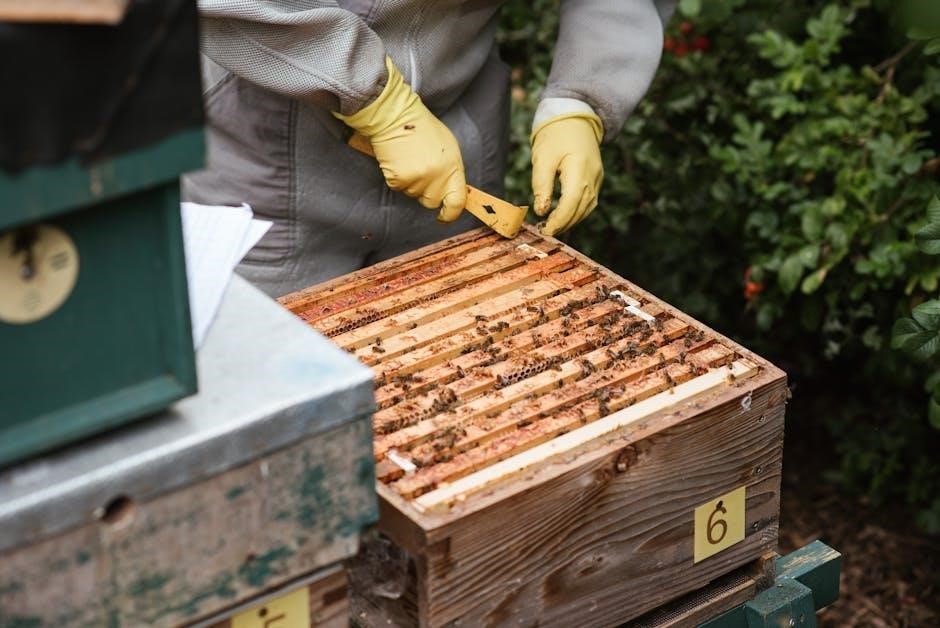
A 10-frame Langstroth beehive includes a hive stand, bottom board, brood box, frames with foundation, supers, inner cover, outer cover, and essential hardware for stability.
4.1 Hive Stand
The hive stand elevates the beehive, improving airflow and reducing moisture accumulation. It typically consists of legs or a platform, designed to protect the hive from pests and ground moisture. The stand’s height allows for easier inspections and hive management. Many plans include optional features like an angled design to prevent water runoff or attachments for additional hive accessories. Durable materials like wood or metal are commonly used for construction, ensuring stability and longevity. A well-designed hive stand is essential for maintaining a healthy and productive beehive environment.
4.2 Bottom Board
The bottom board serves as the base of the Langstroth beehive, providing a platform for the brood box and frames. Typically constructed from durable wood, it features an entrance for bees and a removable panel for cleaning. The design ensures proper ventilation and protects the hive from pests and moisture. Some plans include a screened bottom board to enhance airflow and simplify pest control. The bottom board is a critical component, ensuring the hive’s structural integrity and promoting a healthy environment for the bee colony to thrive.
4.3 Brood Box
The brood box is the heart of the Langstroth beehive, serving as the primary space for the queen to lay eggs and the colony to raise larvae. Typically constructed from durable wood, it houses 10 frames where bees build comb for brood rearing. The box is designed with standard dimensions, such as 16-1/4″ by 18-1/4″ internally, ensuring compatibility with other hive components. Its robust design supports the colony’s growth and is a critical element in the hive’s structure, making it essential for successful beekeeping operations.
4.4 Frames and Foundation
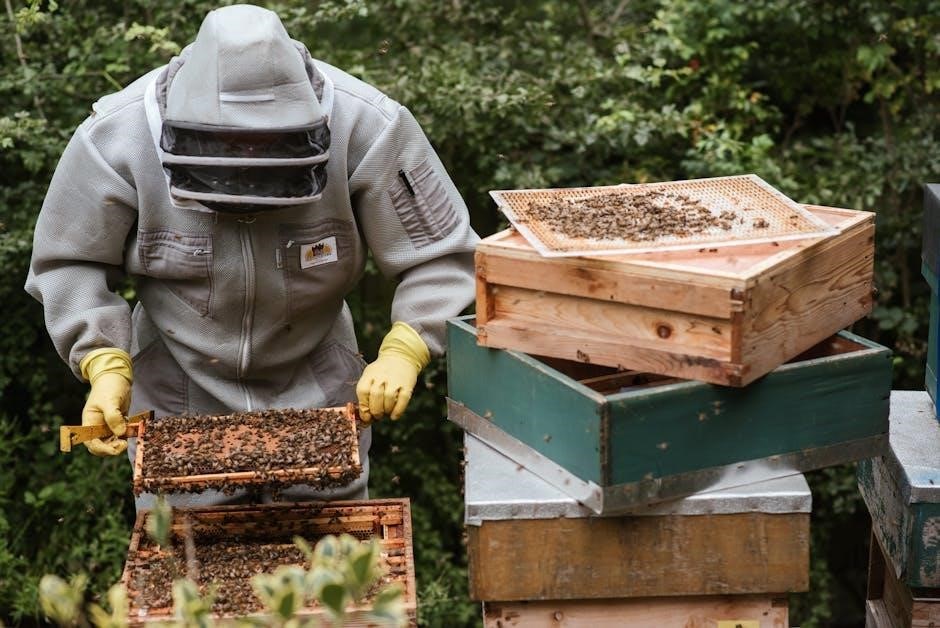
Frames are the structural components where bees build their comb, essential for brood rearing and honey storage. Typically made of wood or plastic, they are designed to fit securely within the hive boxes. The foundation, usually a thin sheet of beeswax or plastic, is attached to the frames to guide the bees in constructing straight comb. Proper frame spacing (approximately 1/4 inch) is crucial to maintain bee space, preventing the bees from sealing the gaps with propolis. This design ensures easy hive management and promotes healthy colony growth.
4.5 Supers
Supers are additional boxes placed on top of the brood box to provide extra space for honey storage. Typically, they are identical in dimensions to the brood box but are used exclusively for honey production. Supers are added as the colony grows, allowing bees to store excess honey without overcrowding the brood area. They are usually equipped with frames and foundation, just like the brood box, and are a key component for beekeepers aiming to harvest honey. Proper super management ensures a healthy hive and maximizes honey yields.

4.6 Inner Cover
The inner cover is a flat, wooden component placed between the supers and the outer cover. It helps regulate hive temperature, improves air circulation, and provides a smooth surface for bees to move between boxes. The inner cover often features a notch or hole for ventilation and emergency feeding. It protects the hive from pests and moisture while allowing beekeepers easy access during inspections. Properly fitting the inner cover ensures optimal hive conditions and simplifies hive management. It is a crucial element for maintaining a healthy and productive colony.
4.7 Outer Cover
The outer cover is the topmost protective layer of the hive, designed to shield the colony from weather, pests, and moisture. Typically made of durable materials like metal or plastic, it fits securely over the inner cover and supers; The outer cover ensures the hive remains dry and well-insulated, promoting a stable environment for the bees. It also prevents predators from accessing the hive. Properly fitting the outer cover is essential to maintain hive health and protect the colony from external threats. It is a vital component for long-term hive durability and functionality.
4.8 Hardware and Fasteners
The hardware and fasteners are essential for securing the hive components together. These include nails, screws, hinges, and handles, ensuring durability and ease of assembly. Durable materials like galvanized or stainless steel are recommended to withstand outdoor conditions. Properly securing the hive with these fasteners ensures structural integrity and protects the colony from pests and weather. The hardware also facilitates easy disassembly for inspections, making hive management more efficient. Choosing the right hardware is crucial for the longevity and functionality of the beehive, ensuring a safe and stable environment for the bees.
Building a 10-Frame Langstroth Beehive
Constructing a 10-frame Langstroth beehive involves cutting and assembling wood components, including frames, foundation, and boxes. Plans provide precise measurements and step-by-step instructions for DIY enthusiasts.
5.1 Materials Needed
Building a 10-frame Langstroth beehive requires high-quality materials, including durable wood like pine or cedar for the hive boxes, frames, and stands. Pre-cut lumber kits are available for convenience. Metal frame wire and plastic or wax foundation are essential for the frames. Hinges, handles, and fasteners like nails and screws are needed for assembly. Exterior-grade plywood is ideal for the bottom board and inner cover. Protective finishes like paint or sealant shield the hive from weather. Ensure all materials are pest-resistant and suitable for outdoor use to maintain hive health and longevity.
5.2 Step-by-Step Construction Guide
Begin by assembling the hive stand and bottom board, ensuring proper alignment and stability. Attach the brood box next, securing it to the stand. Install the frames and foundation, spacing them evenly for optimal bee movement. Add the supers on top of the brood box, aligning them carefully. Attach the inner cover and outer cover, ensuring a snug fit; Finally, place the hive in a suitable location and introduce the bees. Follow detailed plans for precise measurements and assembly to ensure a functional and durable beehive.

5.3 Tips for DIY Beehive Assembly
Use high-quality, weather-resistant materials to ensure durability. Follow the PDF plans precisely for accurate measurements and cuts. Pre-drill holes to avoid splitting wood. Assemble components in the correct order, starting with the hive stand and bottom board. Ensure frame spacing matches the 10-frame design for proper bee movement. Apply a thin layer of wax or foundation to frames for easier bee colonization. Double-check all joints and fasteners for secure fit. Paint or seal the hive to protect it from the elements. Work in a clean, well-ventilated area to maintain hive health and safety.
Best Practices for Using a 10-Frame Langstroth Beehive
Regular inspections ensure hive health and productivity. Maintain proper frame spacing for optimal bee movement. Expand hives as needed to prevent overcrowding. Ensure ventilation and protect from pests and diseases.
6.1 Placement and Orientation
Proper placement and orientation of a 10-frame Langstroth beehive are crucial for hive health. Position the hive in a sunny spot, facing east to southeast to capture morning sun. Ensure the hive is on a hive stand, 18-24 inches high, to protect from pests and moisture. Avoid shaded areas to reduce disease risks. Place hives at least 10 feet apart to prevent congestion. The hive entrance should be slightly tilted to prevent water entry. Keep the surrounding area clear of tall plants to promote airflow and accessibility for inspections.
6.2 Frame Spacing and Bee Space
Proper frame spacing and bee space are essential for a thriving hive. Frames should be spaced evenly, typically 1-1/2 inches apart, to allow bees to move freely. The bee space, approximately 1/4 inch to 3/8 inch, prevents bees from sealing gaps with propolis. Correct spacing ensures efficient comb building and honey production. Frames that are too tight can lead to overcrowding, while excessive space may result in burr comb. Regular inspections help maintain proper alignment and spacing, promoting a healthy and productive hive environment.
6.3 Expanding the Hive
Expanding the hive is crucial for managing a growing colony. Add supers when the brood box is 70-80% full to prevent overcrowding. Ensure frames are properly spaced and aligned. Maintain 1/4 to 3/8 inch bee space to avoid burr comb. Regularly inspect for signs of expansion needs, such as increased activity or honey storage. Plan ahead for seasonal growth and split hives if necessary. Proper expansion ensures a healthy, productive colony and maximizes honey production while keeping bees content and thriving.
Maintenance and Upkeep

Regular inspections, cleaning, and seasonal preparations are essential for hive health; Ensure proper frame spacing, monitor for pests, and perform routine cleaning to maintain a thriving colony.
7.1 Regular Inspections
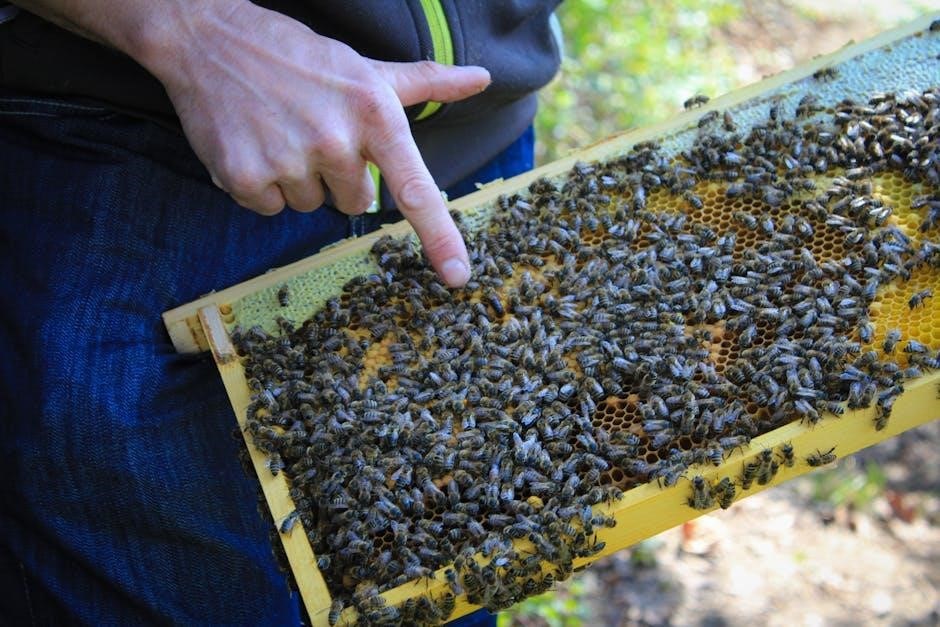
Regular inspections are crucial for maintaining hive health. Check for signs of pests, diseases, and queen performance. Ensure proper frame spacing and brood pattern consistency. Inspect supers for honey stores and signs of swarming. Monitor for varroa mites and small hive beetles. Clean frames and replace damaged ones. Perform inspections every 7-10 days during peak season and less frequently in winter. Record observations to track hive progress and address issues early. Neglecting inspections can lead to colony decline or pest infestations, emphasizing the importance of consistent monitoring.
7.2 Cleaning and Pest Control
Regular cleaning and pest control are essential for maintaining a healthy hive. Clean the hive stand, bottom board, and frames to prevent disease buildup. Use a smoker to calm bees during cleaning. Inspect for pests like varroa mites, small hive beetles, and wax moths. Implement integrated pest management techniques, such as medicinal treatments or natural methods like powdered sugar. Avoid excessive chemical use to protect the colony. Keep the hive environment clean to prevent infestations and ensure the colony’s well-being. Regular maintenance helps sustain a thriving bee population.
7.3 Seasonal Preparations
Seasonal preparations are crucial for maintaining a healthy hive. In spring, inspect for winter damage and ensure proper ventilation. Summer requires monitoring for pests and ensuring adequate honey stores. Fall involves feeding bees, treating for pests, and preparing for winter. Winterize by insulating the hive, reducing entrances, and protecting from harsh weather. Regularly check for signs of disease and adjust hive configurations as needed. Proper seasonal care ensures the colony remains strong and resilient throughout the year, adapting to environmental changes effectively.

Troubleshooting Common Issues
Identify and resolve issues like pests, diseases, or swarming. Regular inspections help detect problems early. Ensure proper hive maintenance to prevent common challenges in beekeeping operations.
8.1 Dealing with Pests and Diseases
Regular inspections are crucial to identify pests like mites, beetles, or diseases early. Integrated pest management (IPM) strategies, such as introducing beneficial insects or using medications, can help control infestations. Maintaining a clean hive environment and ensuring proper ventilation are key preventive measures. Monitor for signs of disease like deformed wings or fungal growth. Treatments may vary depending on the severity and type of pest or disease. Always follow best practices to protect the colony and prevent the spread of issues.
8.2 Managing Swarming Behavior
Swarming is a natural process where bees produce new queens and split, potentially reducing productivity. To manage swarming, monitor for queen cups and congested hives. Add supers to provide space, split hives to reduce congestion, or use swarm traps. Regular inspections and maintaining a healthy hive environment are crucial. Timely interventions can prevent swarming, ensuring the colony remains strong and productive. Proper management techniques help balance hive growth and honey production, keeping your beekeeping operations thriving.
Resources and Further Reading
Find detailed 10-frame Langstroth beehive plans PDF online, along with guides and tutorials. Beekeeping forums and supplier websites offer valuable resources for DIY enthusiasts and experienced beekeepers alike.
9.1 Where to Find 10-Frame Langstroth Beehive Plans PDF
Download 10-frame Langstroth beehive plans PDF from reputable beekeeping websites, DIY forums, or official suppliers. Many online communities and beekeeping resources offer free or premium plans. Ensure the plans are detailed, including measurements and material lists. Check forums like Reddit or specialized beekeeping groups for user-shared designs. Official suppliers often provide downloadable PDFs for accuracy. Verify the source for reliability and updated specifications to ensure a successful build.
9.2 Recommended Books and Guides
For comprehensive guidance, consider books like “The Beekeeper’s Handbook” by Diana Sammataro and Alphonse Avitabile, or “Langstroth’s Hive and the Honey Bee” by L.L. Langstroth. These resources provide detailed insights into hive management and construction. Additionally, “The Backyard Beekeeper” by Kim Flottum is highly recommended for beginners. Online guides and tutorials, such as those from Barry Birkey, offer practical DIY instructions. These books and guides are essential for mastering the art of beekeeping and building a 10-frame Langstroth beehive effectively.
9.3 Online Communities and Forums
Engaging with online communities and forums is an excellent way to connect with experienced beekeepers and access resources. Websites like Beesource and Reddit’s r/beekeeping offer valuable discussions and shared knowledge. Many forums provide links to free 10-frame Langstroth beehive plans PDF files, DIY tutorials, and expert advice. These platforms are ideal for asking questions, sharing experiences, and learning from others. They also often feature reviews of books and guides, helping you find the best resources for your beekeeping journey.
The 10-frame Langstroth beehive remains a cornerstone of modern beekeeping, offering efficiency, scalability, and ease of use. Its widespread adoption is a testament to its practical design, making it ideal for both beginners and experienced beekeepers. With readily available PDF plans, constructing a hive is more accessible than ever. Whether for hobbyists or commercial operations, this hive design promotes healthy bee colonies and sustainable practices. By leveraging online resources, communities, and guides, beekeepers can thrive, ensuring the continued success of this timeless beekeeping tradition.